Remember when spotting phishing emails was easy? The Nigerian prince with terrible grammar? The “urgent” message from your “bank” that looked like it was designed in 1997? Yeah, those days are over.
Welcome to 2026, where artificial intelligence has turned phishing into a precision weapon, and your Scottsdale dental practice, law firm, or CPA office is squarely in the crosshairs.
Here’s the uncomfortable truth: Malware-carrying phishing campaigns jumped 204% in 2025, and small businesses are catching 43% of all cyberattacks despite making up only 30% of the business landscape. The robots aren’t coming, they’re already here, and they’re really good at pretending to be your vendor, your colleague, or even your bank manager.
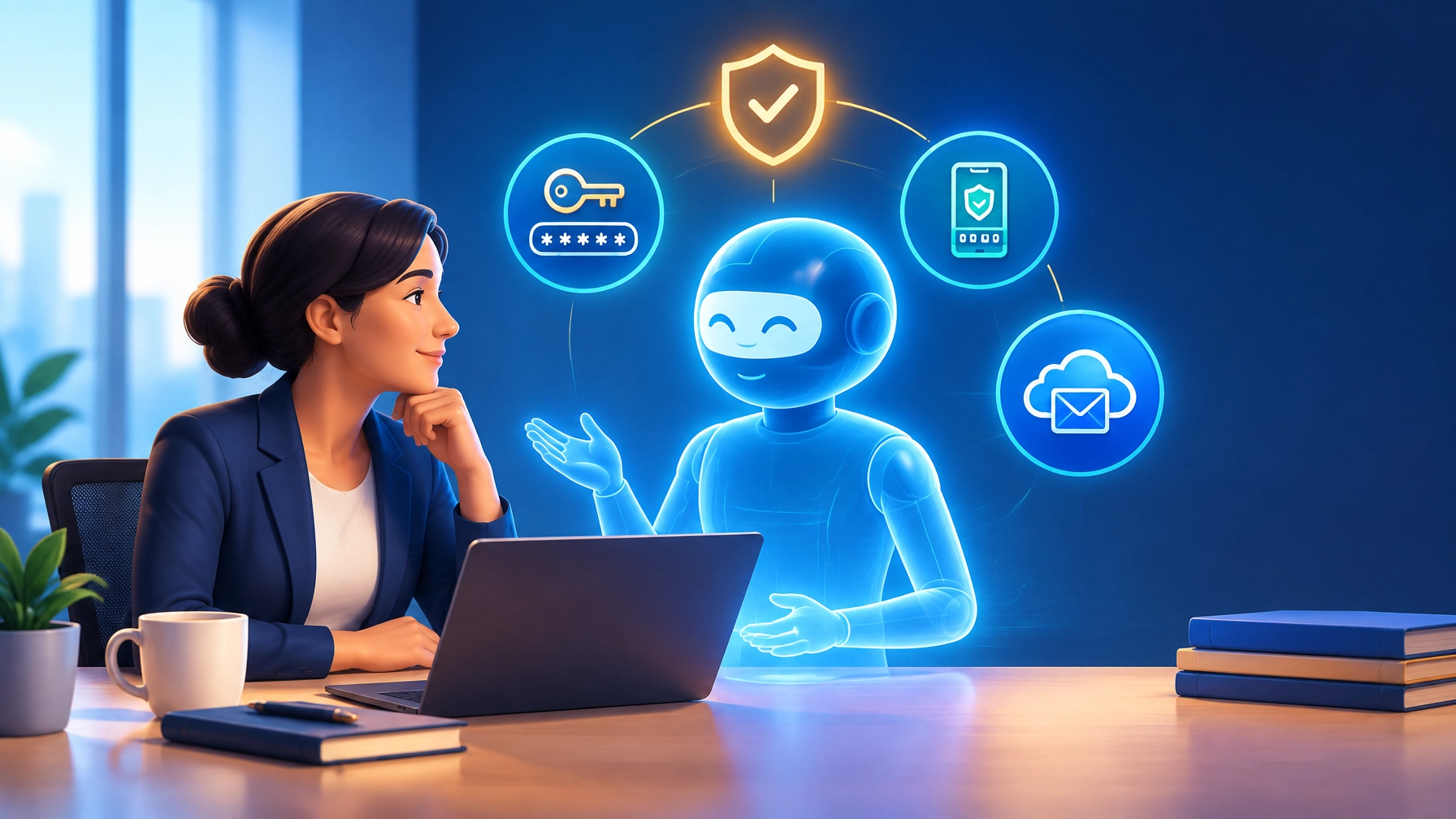
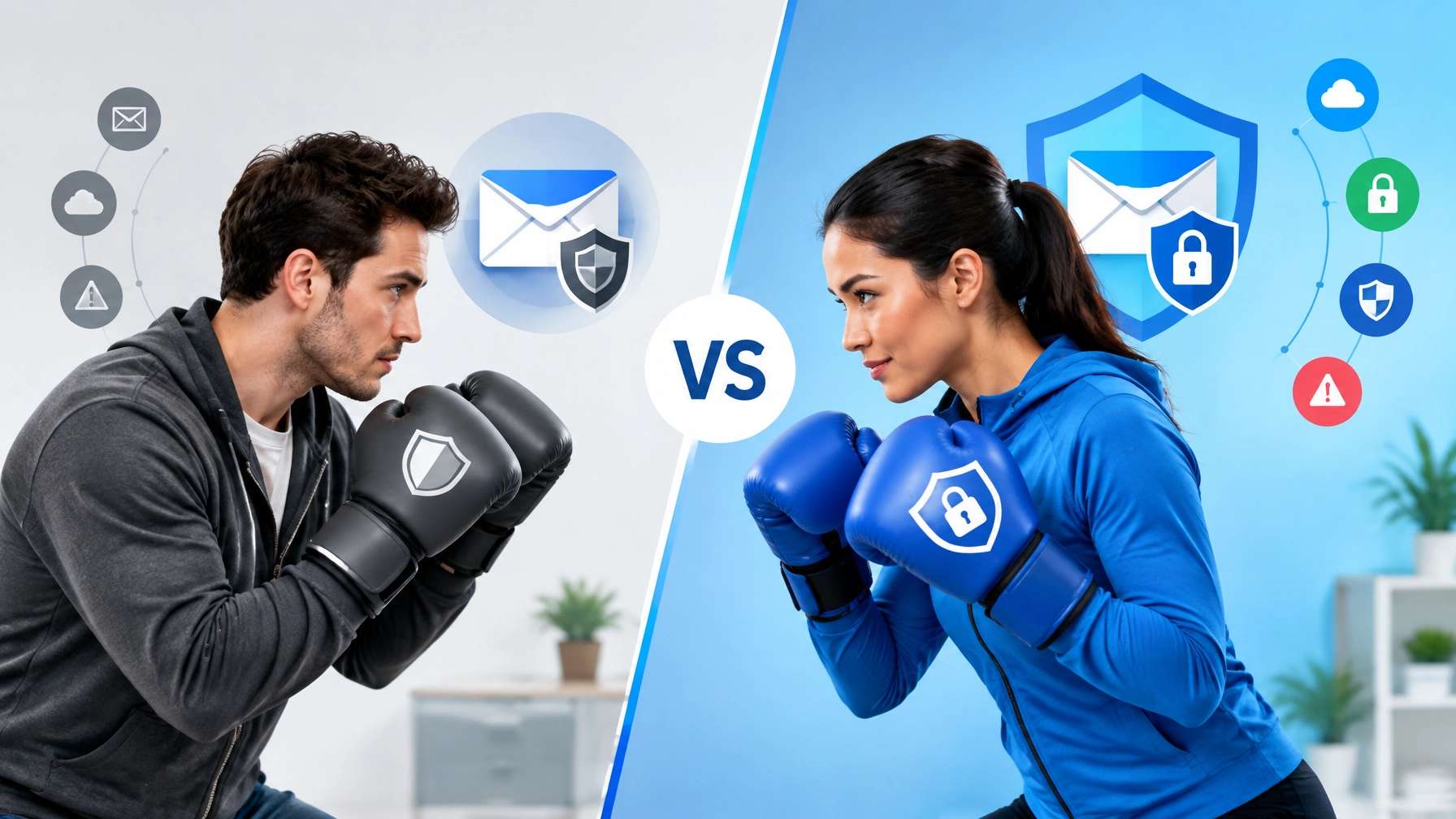
But here’s the good news: We can fight back with better robots. And no, you don’t need a Silicon Valley budget to do it.
Why Your Employees Can’t Spot These Attacks Anymore
Let’s talk about what makes AI-powered phishing so damn effective.
Traditional phishing was like fishing with dynamite, blast out a million poorly written emails and hope someone bites. Modern AI phishing is more like spearfishing. It studies your business. It reads your LinkedIn. It knows who your vendors are, what projects you’re working on, and who handles your accounting.

Then it crafts a message so perfectly tailored that even your sharpest employee won’t think twice before clicking.
Here’s what we’re up against:
Polymorphic phishing means 76% of attack URLs were completely unique in 2025. That signature-based spam filter you’ve been relying on? It’s looking for needles in a haystack where every needle looks different.
Business Email Compromise (BEC) has evolved. Nearly one-in-five malicious emails now look like routine colleague conversations, no suspicious links, no sketchy attachments, just “Hey, can you handle this invoice?” followed by a second email with details. Your brain isn’t wired to flag that as dangerous.
Deepfake social engineering is the stuff of nightmares. AI-generated audio and video can impersonate your boss, your accountant, or that bank manager you’ve been working with for five years. And it’s frighteningly convincing.
The grammar mistakes that used to give phishing away? Gone. AI writes better emails than most humans. The weird formatting? Fixed. The generic greetings? Replaced with your actual name, title, and recent projects.
Your employees aren’t stupid for falling for these attacks. The attacks have simply become too sophisticated for the human eye alone to catch.
The Problem With Fighting Fire With Fire
So the obvious solution is to throw AI-powered security at the problem, right? Deploy some automated defense system and call it a day?
Not quite.
Here’s the trap that a lot of “big box” security providers won’t tell you: Robots alone can’t win this fight.
Static controls and pattern-matching systems can’t keep pace with AI’s level of adaptation. In 2025, 82% of malicious attachments carried unique digital fingerprints while delivering identical payloads. Your automated filter sees a “unique” file and lets it through, not realizing it’s the same ransomware that hit three other businesses last week.
Even worse, attackers are increasingly abusing legitimate tools. Remote access software, cloud platforms, collaboration tools you use every day, these were exploited 57% more frequently in 2025. How’s your automated system supposed to block a threat that’s using your own approved software?

This is where the “robots fighting robots” concept needs an upgrade. You need intelligent automation combined with human judgment, and that’s where the boutique MSP approach makes all the difference.
How AI-Driven Security Actually Works (Without the Fortune 500 Price Tag)
Let’s talk about tools like Avanan and similar AI-driven email security platforms. These aren’t your grandfather’s spam filters.
Instead of just looking for known bad signatures, modern AI security does contextual analysis. It understands what “normal” looks like for your business. It knows that your accounting department doesn’t usually receive wire transfer requests at 7 PM on Friday. It notices when an email claiming to be from your vendor is actually coming from a similar-but-not-quite-right domain.
These systems work in layers:
Layer one is the automated detection, scanning every email for anomalies, suspicious patterns, and known threat indicators. This happens in milliseconds, analyzing factors that no human could catch.
Layer two is where it gets interesting. Instead of just blocking or allowing based on rigid rules, AI security adds a human-in-the-loop component. Suspicious emails get flagged for review. Employees can report weird messages, and that intelligence feeds back into the system in real-time.
Layer three is where your MSP comes in, and this is where boutique providers absolutely destroy call centers.
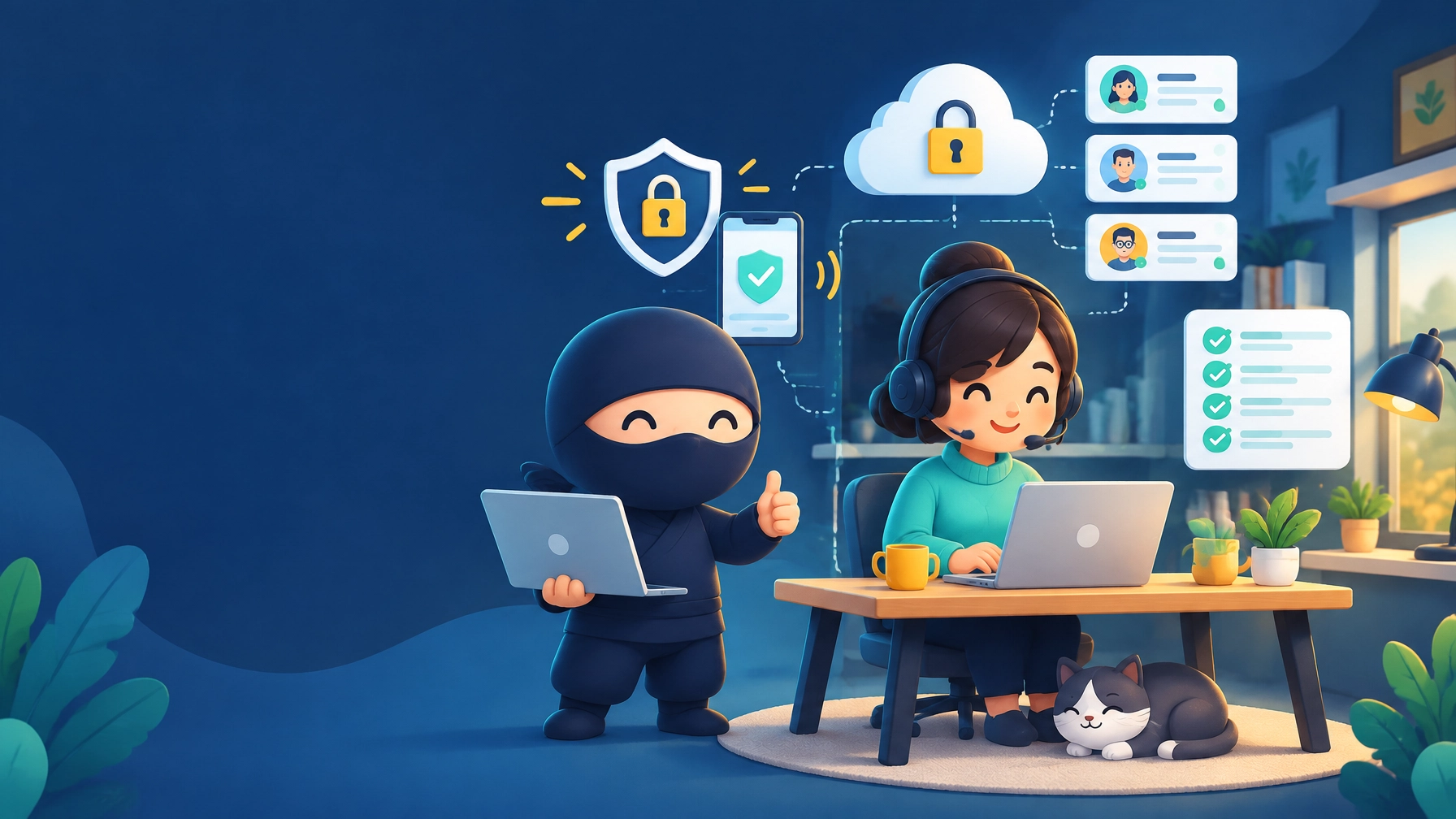
The Boutique Advantage: Why You Need a Ninja, Not a Call Center
Picture this: You get a suspicious email. It looks legit, but something feels off. You need to know, right now, if it’s safe.
Scenario A: The Big Box Call Center
You open a ticket. Maybe you get an auto-reply. Eventually, someone in a different time zone who’s juggling 50 other clients reads your message. They might escalate it. You might hear back tomorrow. Maybe.
Scenario B: Your Personal Ninja
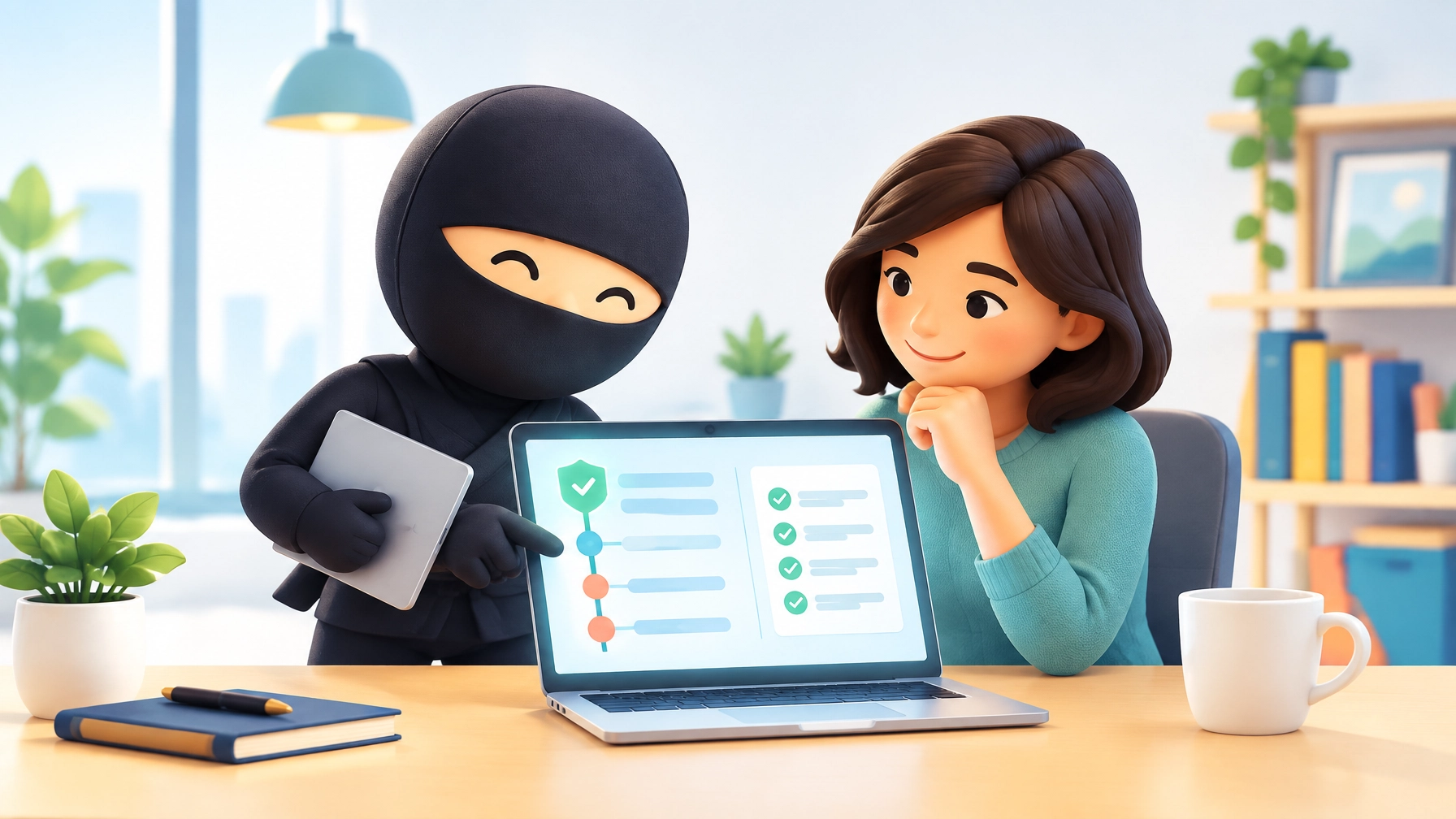
You text or call someone who actually knows your business. They know your vendors. They know your team. They can look at that email and tell you, in real time, “Yeah, that’s legit” or “Delete that immediately and let me investigate.”

This isn’t hypothetical. This is the difference between catching a phishing attack before it hits and explaining to your clients why their data just got exposed.
The research is clear: Human trust is now the primary attack surface. When AI eliminates the obvious warning signs, you can’t rely on automated systems alone. You need someone who understands the context of your business, the relationships you have with vendors, and the patterns of your day-to-day operations.
That’s what a boutique MSP brings to the table. We’re not managing thousands of faceless accounts. We know you. We know your business. And when an AI-powered phishing attack tries to thread the needle between “legitimate” and “malicious,” that personal knowledge is what stops it.
The Real Cost of Getting This Wrong
Let’s talk numbers, because this matters.
The average data breach for small businesses now costs over $4.9 million. Read that again. Not $49,000. Not $490,000. $4.9 million.
For most small businesses, that’s not a setback, that’s game over. Permanent closure.
And here’s the kicker: That’s just the direct financial cost. It doesn’t include the reputational damage, the loss of client trust, or the months of recovery time where your business is basically running on life support.
Compare that to the cost of proper AI-driven security combined with a boutique MSP relationship. We’re talking hundreds, maybe a couple thousand a month depending on your setup. It’s not even close.
What You Can Do Right Now
Look, I’m not here to scare you (okay, maybe a little). I’m here to tell you that this problem is solvable: but only if you take it seriously.
First, assume every phishing attempt may be tailored and technically varied. Train your team, but don’t rely on training alone. The attacks are too sophisticated now.
Second, implement AI-driven email security that does contextual analysis, not just signature matching. Tools like Avanan aren’t prohibitively expensive, and they’re light-years ahead of basic spam filters.
Third: and this is the big one: partner with an MSP who actually knows your business. Someone you can call or text when something feels wrong. Someone who understands the difference between your legitimate vendor and a convincing imposter.
The robots are here, and they’re getting smarter every day. But with the right combination of technology and human expertise, you don’t have to be their next victim.
Your business deserves better than a call center that doesn’t know your name. It deserves a ninja in your corner who’s ready to fight back when the robots come knocking.
Because trust me( they’re knocking.)