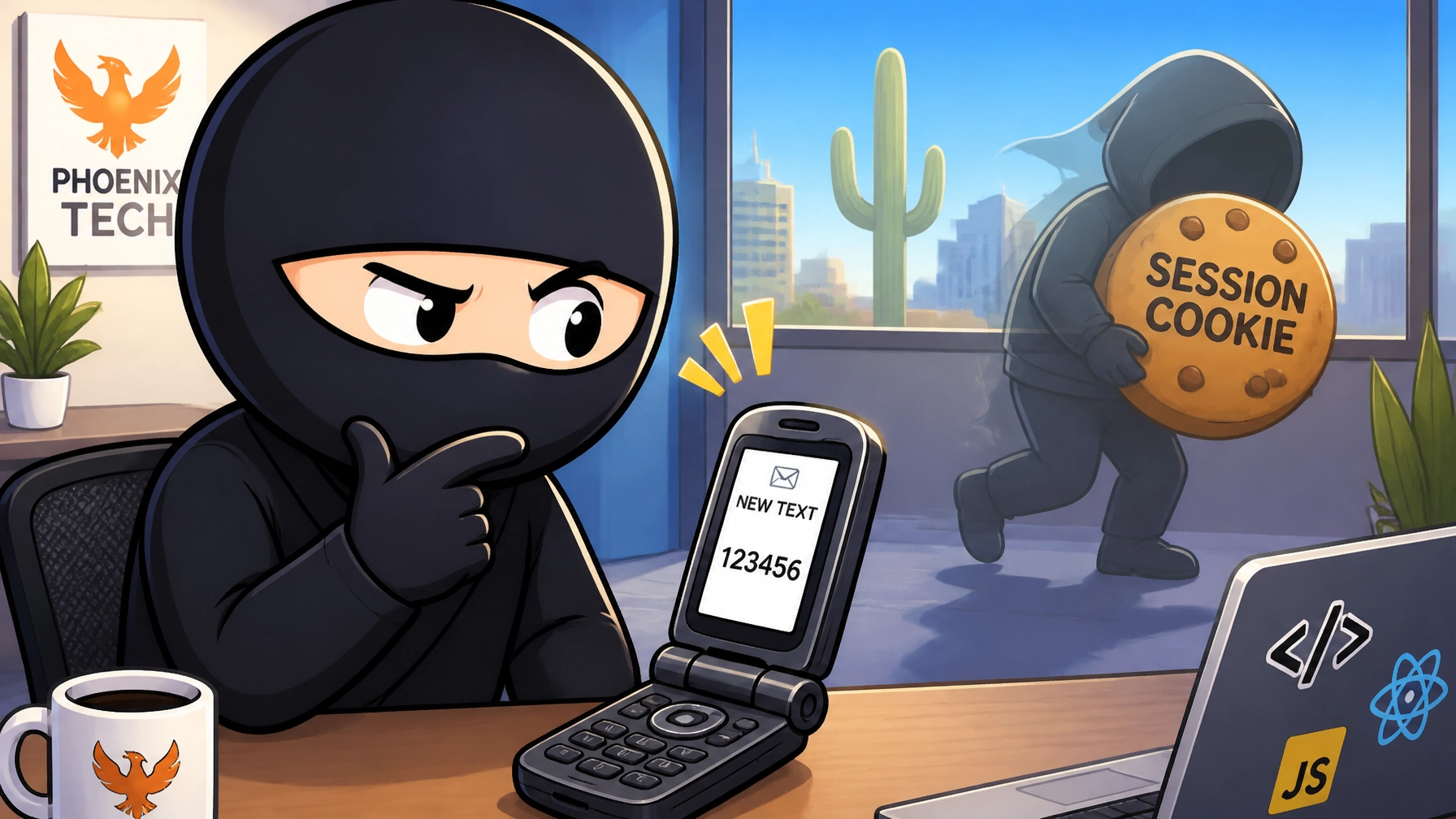
We get it. When your printer decides to start speaking in riddles or your email goes on an unannounced vacation, your first instinct is to grab the phone. You want a human. You want to hear a voice. You want to vent.
But here’s the cold, hard truth: Every time you call your IT guy out of the blue, you’re actually making your problem, and everyone else’s, take longer to solve.
At USTech.Ninja, we operate a bit differently than the “break-fix” guy you used to hire who worked out of his garage. We’re a relationship-driven Phoenix managed service provider, and part of that relationship involves us telling you things you might not want to hear. Like the fact that your “quick phone call” can quietly derail productive work.
It’s not that we don’t like you (we do!). It’s the psychology of how IT work actually gets done. Let’s dive into why pushing toward tickets and scheduled calls isn’t just about our “sanity”, it’s about your business’s bottom line.
1. The High Cost of the “3-Second Interruption”
IT support isn’t like flipping burgers. It’s more like solving a 1,000-piece puzzle where the pieces are invisible and sometimes on fire. This is what we call Deep Work.
When an engineer is deep into a server migration or hunting down a complex security threat for one of our IT support for law firms Phoenix clients, their brain is holding a massive amount of “context.” They are tracking logs, system topologies, and potential vulnerabilities all at once.
Research shows that even brief interruptions significantly increase error rates on complex tasks. And research shows it takes an average of 23 minutes to fully regain deep focus after an interruption.

When you call randomly, you aren’t just taking up 5 minutes of our time. You are effectively stealing 45 minutes of productivity from whatever critical task we were doing to keep a business safe.
2. Phone Calls Are Information Black Holes
Think about the last time you had a detailed conversation on the phone. Now, try to remember the exact phrasing used two weeks ago. You can’t. Neither can we.
In the world of professional IT, if it isn’t documented, it didn’t happen. Random phone calls and “drive-by” texts lack:
- Accountability: Who said what? When was the fix promised?
- Tracking: How many times has this printer broken this month?
- History: If a different technician helps you next time, they have zero context on what was discussed over the phone.
By using our client portal or sending an email, you create a digital paper trail. This is essential for maximizing business efficiency and ensuring that accountability remains high.

When you submit a ticket, our entire team can see the history. We can spot trends, attach screenshots, and log exactly what was done to fix the issue. A phone call is a puff of smoke; a ticket is a permanent record.
3. The Psychology of “Fairness” vs. “Loudest”
In a world governed by random phone calls, the “Squeaky Wheel” always gets the grease. The person who calls three times in a row gets helped before the person who has a critical server outage but is politely waiting their turn.
That’s not how a professional managed IT services Phoenix firm should operate. We triage based on impact and urgency, not on who has the fastest dialing finger.
When you use the ticketing system:
- Critical issues are elevated immediately. (e.g., “My entire office is offline.”)
- Productivity tasks are scheduled. (e.g., “I need a new user set up by Monday.”)
- Nothing gets lost.
This creates a fair environment where your most important problems get the most attention, regardless of how many times you’ve called the office that day.
4. Guarding the Sanity (and Health) of the Ninjas
Let’s be real for a second: the “always-on” culture is a recipe for burnout. If our technicians are constantly being bombarded by texts and random calls on their personal or business lines at all hours, they can’t rest.
A burned-out technician is a dangerous technician. They make mistakes. They miss security patches. They forget to double-check the backups.
We push for scheduled calls and tickets because it allows our team to work in a “calm” environment. When we are on a call with you, it’s a scheduled call, meaning you have our 100% undivided attention. We aren’t checking five other things or worrying about the next interruption. We are with you.

This “Ninja-level” focus is why our clients see fewer recurring issues. We take the time to fix the root cause, not just slap a band-aid on a symptom because we’re rushing to answer the next ringing phone.
Why This is Better for You
You might think that being able to “just call” is a premium service. In reality, it’s a “budget” service that leads to higher costs and more downtime. When you look at how much small businesses should budget for IT support, you should be paying for results, not just access.
By embracing our communication workflow, you get:
- Faster actual resolutions: Because we aren’t constantly restarting our work.
- Better documentation: No more repeating your problem to three different people.
- Higher Security: We have the headspace to ensure your layered defenses (EDR, email security, etc.) are actually working.
- A Partner, Not a Fireman: We move from “putting out fires” to “preventing arson.”
Ready to Work with a Pro?
If you’re tired of the “break-fix” chaos and want a partner who values your time as much as their own, let’s talk. At USTech.Ninja, we handle the tech so you can focus on running your business. And through YourPersonal.Ninja, we also help with concierge-style support for the people who want daily life and admin tasks handled with the same structured approach. Just… maybe send us a ticket or schedule a call first, okay?
Contact us today to learn more about our managed IT services in Phoenix.