Sarah didn’t see the “glitch” until it was too late.
It was a Tuesday afternoon in Phoenix, 105 degrees outside, but Sarah was cool as ice. She was closing the largest deal of her career: a $10 million commercial mortgage for a local tech hub expansion. The emails were flying, the title company was on standby, and the client was ready to pull the trigger on the wire transfer.
Then, the “glitch” happened. An email arrived from the title officer, Mike.
“Sarah, quick update. We’ve had a minor routing change due to an internal audit. Use these updated wire instructions for the $10M funding. Let’s get this done before the 4:00 PM cutoff so we don’t lose the rate lock.”
Sarah glanced at the sender’s address. [email protected]. The logo was right. The signature was right. Even the “sent from my iPhone” footer was there. More importantly, the mention of the rate lock hit her right in the gut. If they missed this window, the client’s interest rate would jump by 0.5%, costing them hundreds of thousands over the life of the loan.
She forwarded the instructions to the client. The client wired the money.
By 4:15 PM, the real Mike called. “Hey Sarah, just checking in. We haven’t seen the wire yet. Everything okay?”
The ice in Sarah’s veins turned to lead. The $10 million wasn’t in the title company’s account. It was currently being tumbled through a series of offshore accounts in Eastern Europe. Sarah’s firm, built over fifteen years of sweat and late nights, was functionally bankrupt before sunset.
The Anatomy of the Attack: Business Email Compromise (BEC)
What happened to Sarah wasn’t a “hack” in the movie sense. No one “cracked the mainframe” with green text scrolling down a screen. It was Business Email Compromise (BEC), the single most expensive threat in mortgage industry cybersecurity today.
According to the FBI’s latest reports, BEC losses have skyrocketed, with real estate and mortgage transactions being the “White Whale” for cybercriminals. Why? Because the payouts are massive, and the security at many small-to-mid-sized mortgage firms is, frankly, like leaving the front door open with a “Welcome” mat.
Step 1: Silent Monitoring
The hackers didn’t just send a random email. They had been inside Sarah’s inbox for three weeks. They weren’t stealing data; they were reading. They learned her tone, her clients’ names, the specific deal flow, and most importantly, the timing of the $10M closing.
Step 2: The Just-in-Time Intervention
Cybercriminals wait for the moment of maximum stress. They know that in the mortgage world, “Time is of the Essence” isn’t just a legal phrase, it’s a psychological weapon. By sending the “updated” instructions right before the wire cutoff, they ensured Sarah wouldn’t have time to second-guess the request.

The 2026 Upgrade: AI-Driven Deepfakes
If you think you’re too smart to fall for a fake email, welcome to 2026. The game has changed. Hackers are now using AI-driven deepfakes to bypass the “just call and verify” rule.
Imagine Sarah had called “Mike” to verify the wire. In the past, she would have recognized his voice. Today, a hacker can take a 30-second clip of Mike from a LinkedIn video or a podcast and use generative AI to clone his voice perfectly. Sarah would have heard Mike’s voice, with his specific Arizonan drawl, telling her, “Yeah, Sarah, the email is legit. The auditors are riding my back today. Just get it sent.”
This isn’t sci-fi; it’s the current state of wire fraud prevention for mortgage professionals. If your firm isn’t using layered defense, you aren’t just at risk: you’re a target.
The Psychology of the Scam: Loss Aversion
Why did Sarah, a seasoned pro, fail to spot the red flag? It comes down to a psychological principle called Loss Aversion.
Humans are hardwired to fear a loss more than we value a gain. The thought of “losing the rate lock” or “losing the deal” triggers a fight-or-flight response in the brain. When we are in that state, our prefrontal cortex, the part responsible for logical thinking and spotting typos, effectively shuts down.
Hackers are master psychologists. They don’t sell you a “gain”; they threaten you with a “loss.” They know that if they make you feel like the deal is slipping away, you’ll skip the security protocols you know you should follow.

The Aftermath: More Than Just Money
When a $10M wire goes missing, the financial loss is just the beginning.
- Reputational Suicide: Who is going to trust a broker who “lost” a client’s life savings or a company’s expansion fund? Word travels fast in the mortgage industry.
- Regulatory Nightmares: Between NPI laws and new 72-hour breach reporting requirements, the legal fees alone can sink a small firm.
- The Human Cost: Sarah’s firm had to lay off five employees. She lost her office. She spent the next two years in depositions.
As we’ve mentioned before in our look at ransomware threats, the cost of a breach is always 10x higher than the cost of prevention.
How to Protect Your Firm: A 2026 Checklist
You don’t need a $1M IT budget to prevent a $10M disaster. You just need a partner who understands that mortgage industry cybersecurity isn’t about fancy software: it’s about proactive habits and layered defense.
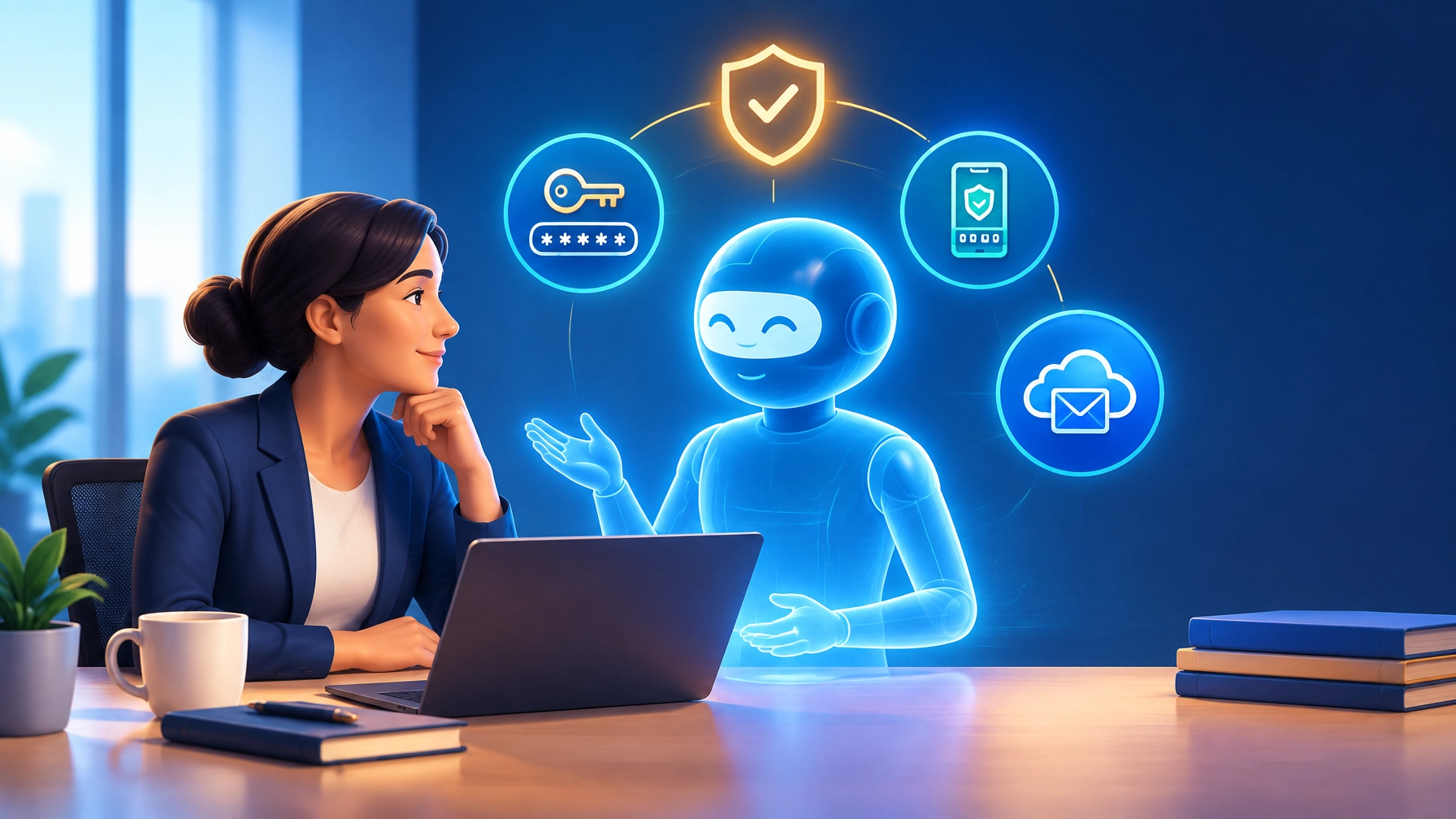
- Mandatory MFA (Multi-Factor Authentication): This is the bare minimum. If you don’t have MFA on your email, you are essentially leaving your vault key under the mat.
- Out-of-Band Verification: Never, ever verify wire instructions via the same medium you received them. If you get an email, call a known number. If you get a call, check the portal.
- Proactive Monitoring: At US Tech Ninja, we provide automated endpoint monitoring that catches “silent watchers” in your system before they have a chance to strike.
- Security Awareness Training: Your team is your strongest asset, or your weakest link. They need to be trained to spot the “loss aversion” triggers that hackers use.
- Modern Web Presence: Often, hackers use outdated website plugins to gain a foothold. Our web design and maintenance services ensure your “digital front door” is bolted shut.

Don’t Wait Until the “Glitch” Happens
The story of the $10M email doesn’t have to be your story. At US Tech Ninja | Your Personal Ninja, we specialize in being the “stealthy guardians” for small and mid-sized mortgage firms. We handle the tech headaches, the security patches, and the proactive monitoring so you can focus on what you do best: closing deals and growing your business.
We aren’t just a faceless helpdesk. We’re your partners in Arizona, ready to provide the concierge-level support you need to stay safe in a world of AI deepfakes and sophisticated BEC.
Are you ready to secure your firm’s future? Do not wait until a problem arises. Check out our Real Estate & Mortgage Special to see how we can build a fortress around your inbox.