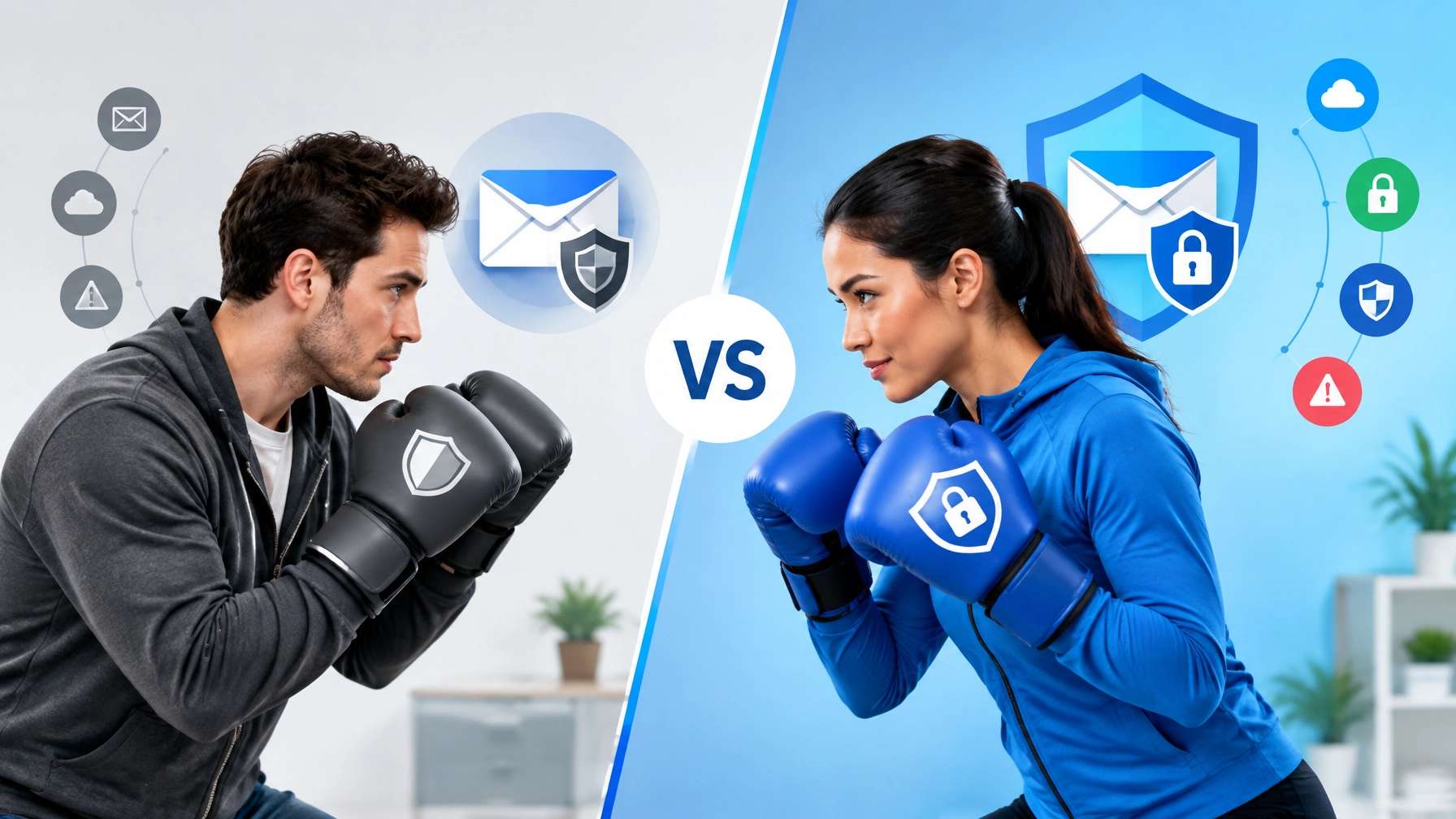
We get it. When something breaks, the phone feels immediate. You want a human, a quick answer, and some confidence that the issue is moving.
The problem is not that people call. The problem is treating a phone call as a support channel.
Email beats the phone for support and coordination almost every time, because it creates a record, it does not require two people to be free at the same moment, and it preserves the details. A phone call requires both people to be available simultaneously, which is how you end up in phone tag instead of a fix. Calls are still the right tool for emergencies, security incidents, and anything genuinely sensitive. The channel is not what makes support slow. The process is.
At USTech.Ninja, we are a relationship-driven provider of Managed IT services Phoenix businesses can rely on, and a big part of doing support well is using the right channel for the right kind of work. That is not about being rigid. It is about making sure requests are tracked, prioritized, and answered with the full context intact.
Here is the paradox people run into all the time: the phone feels faster, but for most support work it is actually the slow path. A call to a person depends on that person being free at this exact moment. A written request enters a queue immediately, where triage can begin within minutes, diagnostics can be pulled, and the issue can be assigned without waiting for anyone to finish a conversation.
The phone feels fast because you are talking, but talking is not troubleshooting. While someone listens to a 15-minute description of a problem, zero technical work is happening. The same issue submitted with a screenshot and an error code can be diagnosed in parallel while the user keeps working. The phone feels fast because you are talking, but a queue starts working the moment you hit submit.
Why Email Beats the Phone
1. Email creates a record.
A ticket, an email, or a portal request produces a timestamp, a description, an owner, a status, and a history. A phone call produces a memory. When the same problem comes back next month, the record lets the team start from what already happened instead of from zero.
2. Email does not require two people to be free at the same moment.
A call is a synchronization demand: both parties have to be available right now, and neither one gets to choose when. Email waits until the other person can give it real attention, which is usually better for anything that requires thought or investigation.
3. Phone means phone tag. Email means it just gets answered.
This is the reason that ends the argument. You call, they are already on something else. They call back, you are in a meeting. You try again after lunch, they are gone for the day. Three days later, nobody has actually spoken to anybody, and the original problem has grown a second problem on top of it. An email does not play tag. It sits there until someone can answer it, and it gets answered. That is the entire advantage in three words: no phone tag.
4. The details survive.
Error messages, exact wording, screenshots, account numbers, links, and the name of the person who saw it first. On a call, you are describing what you see while someone writes it down imperfectly, and both of you are guessing at what the other meant. In writing, the details arrive intact.
5. It reaches the right person without a warm handoff.
A structured request goes into a system where the right person can pick it up. A call goes to whoever answered the phone, who then has to relay it, and the relay is where information decays.
6. More than two people can see it at once.
Email and tickets let a whole team have the same information at the same time, including whoever covers for someone who is out. A call is two people and a closed door, and everyone else starts from nothing.
7. It does not break deep work.
Complex technical work requires sustained focus, and interruptions carry a real cost in error rate and refocus time. That cost is not abstract: it shows up as mistakes, missed steps, and slower recovery on whatever was already in progress.

8. It makes priority honest.
When requests arrive by phone, the loudest and most persistent caller gets served first, which is a terrible way to triage. In writing, requests can be sorted by business impact and urgency, so the server outage does not wait behind someone who dialed four times about a printer.
9. It is searchable later.
"When did we discuss this, and what did we decide" is a one-second question with a record and an hour of archaeology without one. This matters most during an audit, an insurance review, or a dispute where somebody needs to prove what was agreed.
10. It protects everyone's time, including yours.
A phone-first culture quietly turns into an always-on culture, and the person on the other end of that is a human being who needs to rest to do good work. Email respects that the answer does not have to happen this second to be valuable.

Side-by-Side Reality Check
If a business is weighing an on-call one-person provider against a documented support process, this is the practical difference:
| The always-available one-person model | A documented support process | |
|---|---|---|
| When the person is with another client | Sends you to voicemail, or answers while distracted | The request enters the queue immediately and triage starts |
| Complex error messages | Several minutes spent spelling alphanumeric strings out loud | Captured exactly via screenshot or system telemetry |
| When the issue returns next month | Starts from scratch trying to remember what was done | Pulls up the history, identifies the pattern, fixes the root cause |
| A genuine critical emergency | The line is busy with routine questions | The emergency path is open because routine requests route elsewhere |
| A cyber insurance or compliance audit | Little or no proof of changes or authorized requests | A timestamped record of what changed and who authorized it |
When a Call Is Genuinely the Right Call
Email is not a religion. Pick up the phone when:
- Something is an active emergency, such as an outage or a system down that is stopping work right now
- It is a suspected security incident and speed matters
- The topic is genuinely sensitive, such as bad news, a mistake, a billing problem, or a relationship issue that tone-deaf text would make worse
- The conversation has already spent more than two or three emails going in circles, which means the medium is failing, not the people
- You have not talked to the person in months and the relationship matters more than the efficiency
The phone line is not closed. It is reserved. Genuine P1 emergencies, active outages, and suspected active breaches should go to the phone immediately, and there is an emergency path for exactly that. Because everyday requests are routed through tickets instead of the phone line, the phone is actually available when a real emergency happens.
We do not ban the phone, we protect it. Nobody wants a busy signal during a ransomware incident because someone else was on the line about a printer.
The rule of thumb: use a call when the value is in the moment, and use email when the value is in the record.
The Single-Threaded Problem With "Call My Guy"
A lot of businesses like the idea of being able to call their person directly. That instinct makes sense. It feels personal, and it feels responsive.
But what happens when that person is under another client's desk, driving across town, working a critical outage for someone else, or on vacation?
When a business depends on reaching one person, that person either interrupts your work to take someone else's call or interrupts someone else's work to take yours. If an engineer answers your call instantly while they are supposed to be working on another client's problem, they will do the same thing to you tomorrow.
This is not an argument that small providers are bad people. It is an argument about single-threaded capacity and what it does to response quality. You do not want half of an engineer. You want focused attention, from a team rather than one person.
Writing Protects Your Business, Not Just Our Schedule
This is where the conversation usually gets clearer. Written support is not just about making the technician's day tidier. It protects the business on the other side of the request.
For insurance and compliance, documentation matters. Cyber insurance underwriters and frameworks such as HIPAA, PCI, and the FTC Safeguards Rule expect audit logs and change records. A phone call is invisible to an auditor.
For accountability and authorization, writing matters. If a verbal instruction is misheard and the wrong mailbox or permission group gets changed, a written record shows what was requested, who authorized it, and what was done. That protects the client as much as the provider. We wrote the longer version of that argument in The Importance of Accountability: Why Following Through on Agreements Matters.
For pattern detection, history matters. A record lets the team see that this is the fourth time this month, and fix the root cause instead of the symptom.
For continuity, shared visibility matters. When the usual contact is out, a written history means whoever covers can pick up the thread without starting over.
In IT and security, verbal agreements are dangerous. A written request creates a permanent record of what broke, who approved the change, and how it was resolved. That record is what protects you when it matters.
Email Is Not Automatically Slow
If email feels slow at your business, the channel is almost never the reason. The usual causes are an unmonitored inbox, no defined response window, no priority levels, no assigned owner, and no visibility into what is open. Fix those and email becomes the fastest channel you have, because nothing waits on someone being free at the same second.
That is also why support here runs through the client portal during business hours, with automated monitoring around the clock, so requests are tracked rather than remembered.

What a Good Request Contains
Keep it simple:
- What you were doing when it happened
- What you expected and what happened instead
- The exact error text, or a screenshot
- Who is affected and whether it is stopping work
- When it started, and whether it is still happening
- Anything you already tried
The Answer When Someone Says They Prefer to Just Call
That preference is understandable. A lot of people have worked with providers whose whole model was basically, call my cell and I will pick up if I can.
But when you hire someone whose model is answering their cell phone, you are buying access to one person's interruptions. When they are helping you, they are taking calls from other people. When they are with other people, you are in phone tag.
We build our service around operational reliability instead: everything is tracked, prioritized by business impact, and resolved without depending on memory, and the emergency line stays open for actual emergencies.
If someone wants a chat while their issue waits, that is a valid choice. If they want systems that break less often and a team that can prove what it did, that is what we build.
This Standard Shows Up More Than Once
If someone becomes a client, they will run into this same principle in more than one place, and that is deliberate. It shows up in the welcome packet as part of setting communication expectations on day one, in the automatic confirmation they receive when they submit a request, and in how we write back to them. A standard that only exists in a blog post is a preference. A standard that shows up in onboarding, in the queue, and in the follow-up is a process. We covered the operational side of that in Maximizing Business Efficiency: A Comprehensive Guide to Modern Operations.
The same logic applies to how your business handles its own customer requests. If a client calls and the details live in one person's memory, that business has the same phone tag problem, the same missing history, and the same inability to show an auditor or an insurer what was asked for and what was done. The medium matters less than whether a record exists.
Whatever channel a business chooses, the question worth asking is whether someone else could pick up the thread tomorrow without asking the same questions again. If the answer is no, the channel is not the problem.
Ready to Work with a Pro?
If you are tired of support chaos and want a team that handles communication in a way that actually leads to faster, cleaner resolutions, let’s talk. At USTech.Ninja, we handle the tech so you can focus on running your business. And through YourPersonal.Ninja, we also help with concierge-style support for the people who want daily life, admin support, and structured help handled with the same disciplined approach.
Contact us today to learn more about our managed IT services in Phoenix.