![[HERO] Your Service Provider Already Knows How This Ends: The Multi-Million Dollar Cost of Emotional Defensiveness](https://cdn.marblism.com/VHIVjO5WGji.webp)
Over half of professional advisors terminate relationships with clients who ignore their recommendations. Think about that for a moment. These are experts who depend on your business for income, yet they’d rather fire you than continue watching you reject the advice you’re paying for.
They’re not being difficult. They’ve just seen this pattern play out enough times to know the ending.
The Data Doesn’t Lie (Even When You Want It To)
Research shows that 53% of workers who actively seek out professional advice end up ignoring it. Not people who were forced into consulting with experts, people who voluntarily reached out for help, paid for expertise, and then did whatever they wanted anyway.
The consequences are measurable and expensive:
- Organizations that reject expert guidance due to emotional resistance consistently underperform and miss critical opportunities
- Defensive leaders are rated as less effective across every business metric including self-awareness, communication, adaptability, and ability to meet objectives
- Companies where leadership ignores feedback experience disengagement, poor decision-making, low morale, increased turnover, and damaged reputation
- UK businesses alone lose £18 billion annually in lost productivity due to defensive behaviors, projected to reach £26 billion by 2030
This isn’t theory. Blockbuster failed to listen when the market signaled a shift toward streaming services, resulting in bankruptcy while Netflix dominated. Toys R Us ignored customer feedback about checkout issues for a decade, filing for Chapter 11 bankruptcy four months after finally acknowledging the problem.

What It Actually Costs When You Ignore IT Advice
Let’s talk about the specific financial impact of ignoring cybersecurity and IT recommendations, since that’s where most business owners get emotionally defensive about spending money:
The average cost of a data breach is now $4.88 million globally. In healthcare, it’s $9.77 million. In finance, $6.08 million. For small to medium-sized businesses, ignoring cybersecurity recommendations costs over $1 million per incident.
Here’s what makes those numbers particularly brutal: breaches disclosed by attackers cost $930,000 more than breaches caught by internal security teams. Translation: if you’d listened to your Phoenix managed service provider’s recommendation to implement proper monitoring, you’d have saved nearly a million dollars on top of the base breach cost.
The UK provides even more granular data: 70% of medium businesses and 74% of large businesses experienced cyber attacks in the last 12 months. UK businesses face a new cyberattack every 44 seconds. The average time to identify and contain a breach is 287 days, during which your business is hemorrhaging resources trying to fix what preventive measures would have avoided.
Average UK ransom payments now exceed £350,000. That’s the cost of ignoring the advice to implement proper backups and security protocols because it “felt expensive” at the time.
The Hidden Costs Pile Up After the Breach
The direct breach cost is just the beginning. What happens after is what actually kills businesses:
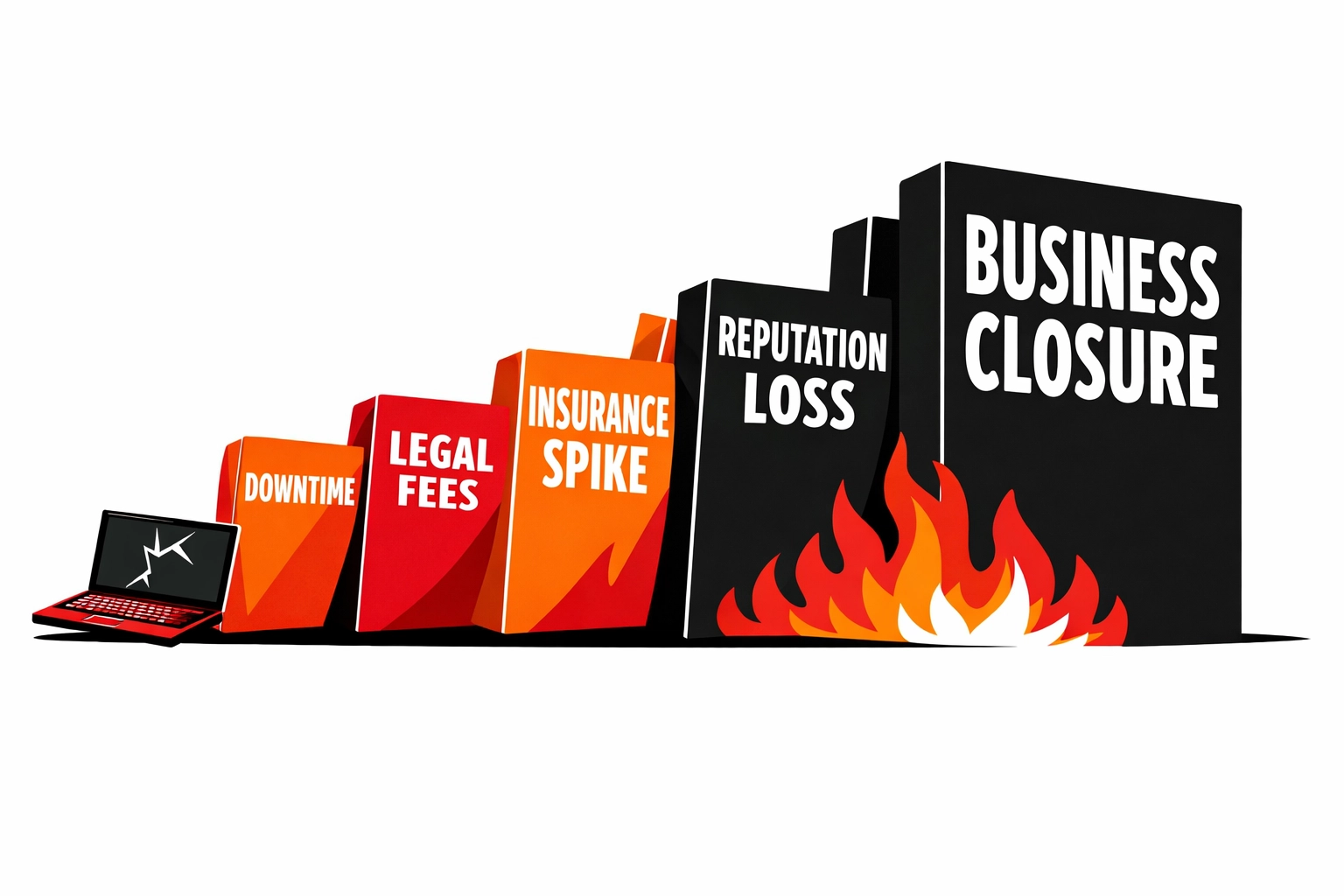
- Downtime costs: When systems are offline, work stops. Orders aren’t processed, customers aren’t served. A single day of downtime can cost tens or hundreds of thousands in lost revenue
- Insurance premium increases: After an incident, cyber insurance premiums spike, coverage tightens, and exclusions multiply. The bill keeps coming long after the breach is “resolved”
- Legal and regulatory fines: GDPR violations, mandatory breach disclosures, investigations, and ongoing regulatory risk create permanent legal expenses, especially critical for HIPAA IT compliance in Phoenix
- Reputation damage: Loss of customer trust, partner hesitation, brand erosion, and customer churn that impacts revenue for years
- Premium emergency rates: Forensic investigators, external cybersecurity specialists, and legal advisors all charge premium rates for urgent incident response
IBM’s research shows that organizations short-staffed in cybersecurity experience an average loss of $1.76 million more in breach costs than properly staffed organizations. That’s the cost of ignoring the recommendation to invest in adequate IT resources because hiring “felt expensive.”
The Real Cost of Emotional Decision-Making
When you demand immediate support for non-critical issues because you’re frustrated, you’re not being decisive, you’re derailing priorities and wasting resources on urgency that doesn’t match reality. When you DIY critical infrastructure because spending money “feels wrong” in the moment, you’re setting up a future breach that will cost 10-50x what the proper solution would have cost upfront.
When you get defensive and reject recommendations because being wrong feels uncomfortable, you’re choosing ego protection over operational effectiveness, and the market doesn’t care about your feelings when it delivers a $4.88 million bill.
Here’s what makes this particularly expensive: when you ignore expert advice, you don’t just damage the relationship. Research shows that having recommendations rejected actually reduces the advisor’s self-perceived expertise and confidence. Your emotional defensiveness is so irrational it makes experts question their own judgment.
That’s why they fire you. Not because you’re difficult to work with, but because continuing the relationship means either doubting their expertise or watching you fail, and neither option is acceptable.
The Pattern You Won’t Admit You’re In
If you’re reading this thinking “that’s not me” or “my situation is different,” congratulations, you’re exactly who this data describes. The cognitive bias research shows that the people most affected by emotion-driven decision-making are often the least able to recognize it in themselves.
Ask yourself these questions:
- How many times in the last six months have you felt IT urgency that, in hindsight, wasn’t actually time-sensitive?
- When was the last time you implemented a recommendation you didn’t fully agree with, just to test whether your provider’s expertise exceeded your intuition?
- If your Scottsdale IT support provider told you that your current approach is setting you up for a multi-million dollar breach, would your first reaction be to get defensive about spending money, or to ask what the implementation timeline looks like?
Your answers to those questions predict whether you’ll be in the 70% of businesses that experience a breach or the minority that avoid becoming a cautionary tale.
How to Actually Work With Service Providers (Like an Adult)
If you’ve recognized yourself in any of the patterns above and want to change the outcome, here’s what functional client relationships actually look like:
Communicate directly with your service provider, not around them. Complaining to your staff, other vendors, or business partners about your IT provider while simultaneously refusing to have direct conversations about concerns is both unprofessional and counterproductive. If you have an issue, say it directly to the people who can actually address it.
Ask for clarification instead of making assumptions. If you don’t understand why a recommendation matters, ask. “Why does this need to happen now versus next quarter?” is a reasonable question. Ignoring the recommendation because you didn’t bother to understand the reasoning is not.
Separate your emotional reaction from the business decision. Feeling frustrated about a problem is normal. Making operational decisions based on that frustration rather than the underlying data is expensive. Learn to recognize when you’re reacting emotionally and pause long enough to verify whether the urgency you feel matches the actual business risk.
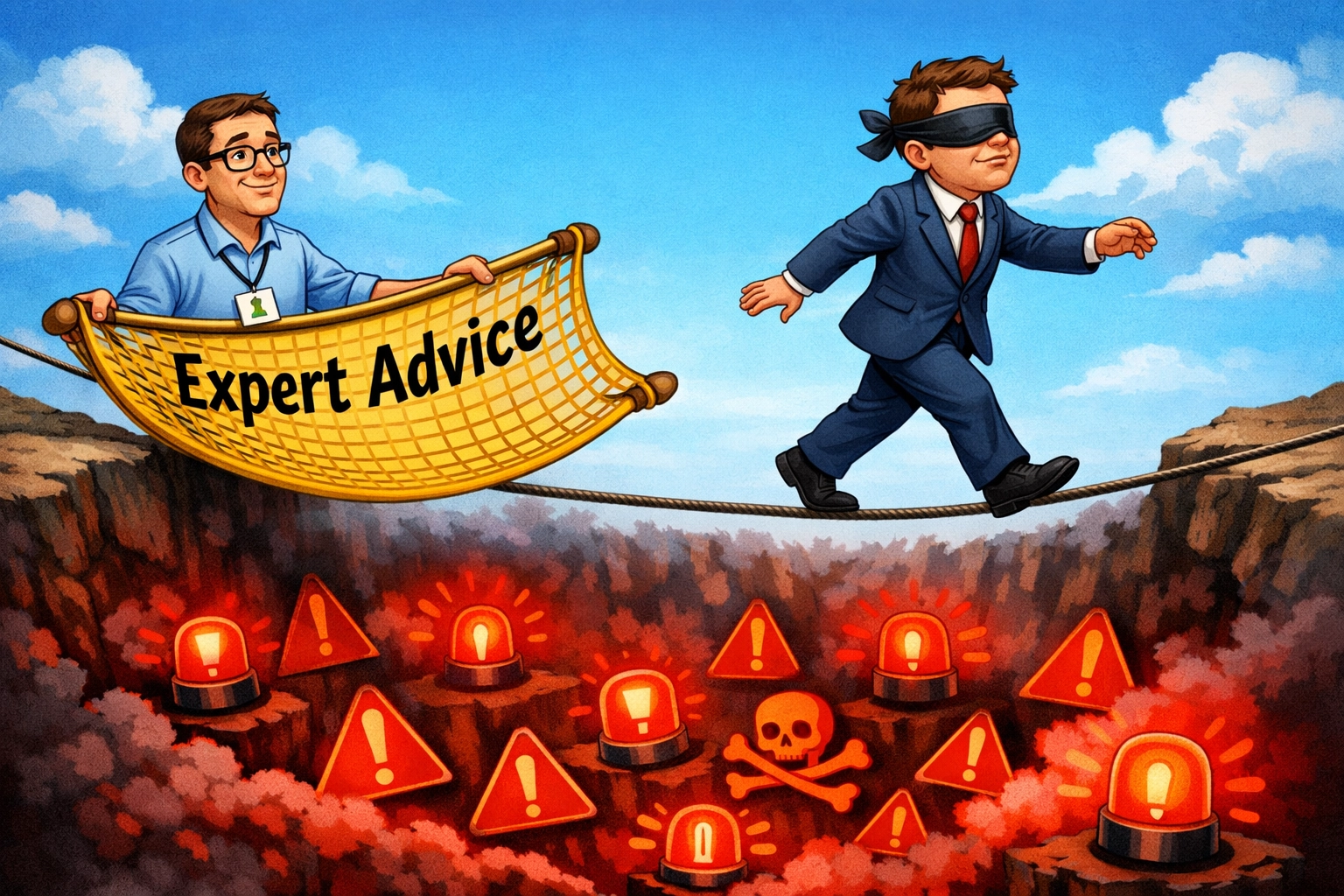
Accept that being corrected by an expert you’re paying is the entire point of paying them. If your IT provider tells you something you’re planning to do is a bad idea, that’s them doing their job, not attacking you personally. The correct response is “okay, walk me through why” not getting defensive and doing it anyway to prove you’re in charge.
Stop treating professional service relationships like they require emotional labor. Your IT provider is not your therapist, your friend, or your employee who needs to manage your feelings. The transaction is: you have a problem, they have expertise, they apply that expertise to solve it. If you need someone to validate your emotions before implementing solutions, hire a coach: don’t expect your technical service providers to perform emotional labor as a prerequisite to doing the work you’re paying them for.
What This Actually Means For Your Business
Barnes & Noble employees and customers could have warned about Amazon’s threat, but leadership didn’t listen. JCPenney could have learned that customers cared more about feeling like they got a deal than actual pricing, but they didn’t ask before implementing new pricing schemes. Blockbuster could have pivoted to streaming, but they ignored the market shift until it was too late.
The businesses that outperform their competitors aren’t run by people who never feel emotional urgency or frustration. They’re run by people who verify those feelings against data and expert recommendations before committing resources.
They understand that paying for expertise means actually using it: not paying for validation of decisions they’ve already made emotionally. They recognize that “I pay you money, you provide this service” works both ways: the transaction includes listening to what the service provider tells you, not just getting them to execute what you’ve already decided.
The difference between a $50,000 prevention investment and a $4.88 million breach cost is whether you listened to the advice you paid for.
Where We Draw The Line
We work with business owners who view IT infrastructure as something that either works or doesn’t: not as a relationship that requires emotional management. The service model is straightforward: you have a problem, we fix it based on what the data and best practices support, not based on how urgent it feels in the moment.
If you need your service provider to decode frustrated messages, validate your feelings before implementing solutions, or maneuver around your defensiveness when you’re wrong, we’re not the right fit. That’s not because we’re inflexible: it’s because that dynamic produces worse outcomes for your business.
The clients we work with best are the ones who’ve looked at the $4.88 million average breach cost and decided they’d rather spend $50,000 on prevention than millions on recovery. They communicate directly when they have concerns. They ask for clarification when they don’t understand a recommendation instead of ignoring it. They understand that being told you’re wrong by someone you’re paying for expertise isn’t an attack: it’s literally what you hired them for.
If you’re reading this and thinking “finally, someone who just tells me what actually works instead of managing my feelings about it,” we should talk.
If you’re reading this and feeling defensive about the breach statistics, ask yourself: would you rather feel defensive now, or explain to your board why you’re writing a seven-figure check to ransomware attackers because you didn’t want to implement the backup solution your IT provider recommended?
The question isn’t whether you experience emotional reactions to IT spending. The question is whether you’re willing to verify those reactions against breach cost data before rejecting recommendations. One approach builds resilient businesses. The other builds IBM’s average breach cost statistics.
Whether you’re a CPA firm needing cybersecurity in Arizona or a healthcare practice requiring HIPAA IT compliance in Phoenix, the math doesn’t change: prevention costs less than recovery. The only variable is whether you’ll listen before you become the cautionary tale.