Picture this: Two business owners submit nearly identical support tickets on the same Tuesday morning. Both need their email configured on a new device. Both are paying customers with similar service plans. Both get the same technical resolution within 24 hours.
But here’s the kicker: one ticket costs your MSP twice as much to resolve as the other.
The difference isn’t technical complexity. It’s not about equipment compatibility or network configuration. The difference is entirely human: the emotional tone and communication style of the interaction.
The Hidden Cost of Emotional Labor in Technical Support
Most business leaders don’t realize that not all support interactions carry the same operational cost, even when the technical problems are identical. Recent workplace research reveals that difficult customer interactions create measurable overhead that ripples through your entire support operation.
Studies on emotional labor in service industries show that when support staff encounter hostile, demanding, or emotionally volatile customers, their performance measurably degrades across multiple metrics. The impact isn’t just psychological: it’s quantifiable in time, quality, and team retention.
One comprehensive study found that service employees dealing with dysfunctional customer behavior experienced increased stress that directly correlated with longer resolution times, more errors, and higher turnover intentions. Another research project tracking frontline employees revealed that emotional labor after difficult interactions reduced their ability to effectively serve subsequent customers for hours afterward.
This isn’t about thin-skinned technicians or unreasonable service standards. This is about recognizing that human interactions have real business costs: and managing those costs intelligently.
How We Measure the Real Impact
At Your Personal Ninja, we track something most MSPs ignore: the true cost difference between emotionally neutral and emotionally difficult support interactions.
Our internal system uses a simple, anonymized tagging method for every ticket:
- Neutral: Professional, clear communication focused on problem resolution
- Frustrated: Elevated emotion but still collaborative toward solutions
- Difficult: Hostile, abusive, or deliberately unproductive communication
Here’s what our data reveals after tracking thousands of interactions:
Time Investment:
- Neutral tickets: Average 18 minutes total touch time
- Frustrated tickets: Average 24 minutes total touch time (+33%)
- Difficult tickets: Average 31 minutes total touch time (+72%)
Communication Overhead:
- Neutral tickets: 2.1 exchanges on average
- Frustrated tickets: 3.4 exchanges on average
- Difficult tickets: 4.8 exchanges on average
Resolution Quality:
- Neutral tickets: 94% first-time resolution rate
- Frustrated tickets: 87% first-time resolution rate
- Difficult tickets: 76% first-time resolution rate
Team Impact:
- Technicians report measurably lower confidence and energy after difficult interactions
- Subsequent ticket quality drops for 2-3 hours following abusive interactions
- Escalation requests increase 40% on days with multiple difficult interactions
The math is straightforward: difficult interactions don’t just cost more in the moment: they create a productivity drag that affects your entire operation.
Fair Boundaries, Clear Standards
Recognition of these costs doesn’t mean we blame customers for having bad days or technical frustrations. Everyone gets overwhelmed sometimes, and legitimate technical problems can be genuinely stressful for business owners.
However, it does mean we maintain clear, professional boundaries about acceptable communication.
Our policy is simple:
- We welcome frustrated customers. Technical problems are genuinely stressful, and we’re here to solve them calmly and efficiently.
- We don’t accept abusive behavior. Personal attacks, threats, profanity directed at staff, or deliberately unproductive communication crosses a line.
- We document everything. Every interaction is logged, and patterns are tracked objectively.
- Communication overhead charges apply only when data justifies them. In rare cases where interactions require dramatically more time due to non-technical factors, we may apply a communication overhead line item. This happens in less than 2% of all tickets and only when metrics clearly demonstrate excessive resource consumption.
The goal isn’t punishment: it’s sustainability. We can only provide excellent service to all our clients when we protect our team’s ability to work effectively.
What We Do Differently: Process Over Chaos
Clear SLA Standards: Every client knows exactly what to expect and when. Our response times, escalation procedures, and resolution targets are documented and measurable.
Calm Communication Training: Our entire team trains specifically in de-escalation and clear technical communication. We’re not just technical experts: we’re communication professionals.
Proactive Problem Prevention: Rather than just reacting to issues, we monitor, document, and prevent problems before they become urgent tickets. This reduces stress for everyone.
Transparent Documentation: Every step is recorded, every decision explained, and every solution documented for future reference.
Fair Resource Allocation: By managing communication overhead professionally, we ensure that all clients receive excellent service without subsidizing difficult interactions through higher overall pricing.
The Business Case for Emotional Intelligence in IT
Smart business owners understand that sustainable service delivery requires managing all costs: including the human costs of difficult interactions. This isn’t about avoiding challenging technical problems or expecting unrealistic patience from frustrated users.
This is about recognizing that professional, collaborative communication makes everything work better: faster resolutions, clearer explanations, fewer misunderstandings, and better long-term relationships.
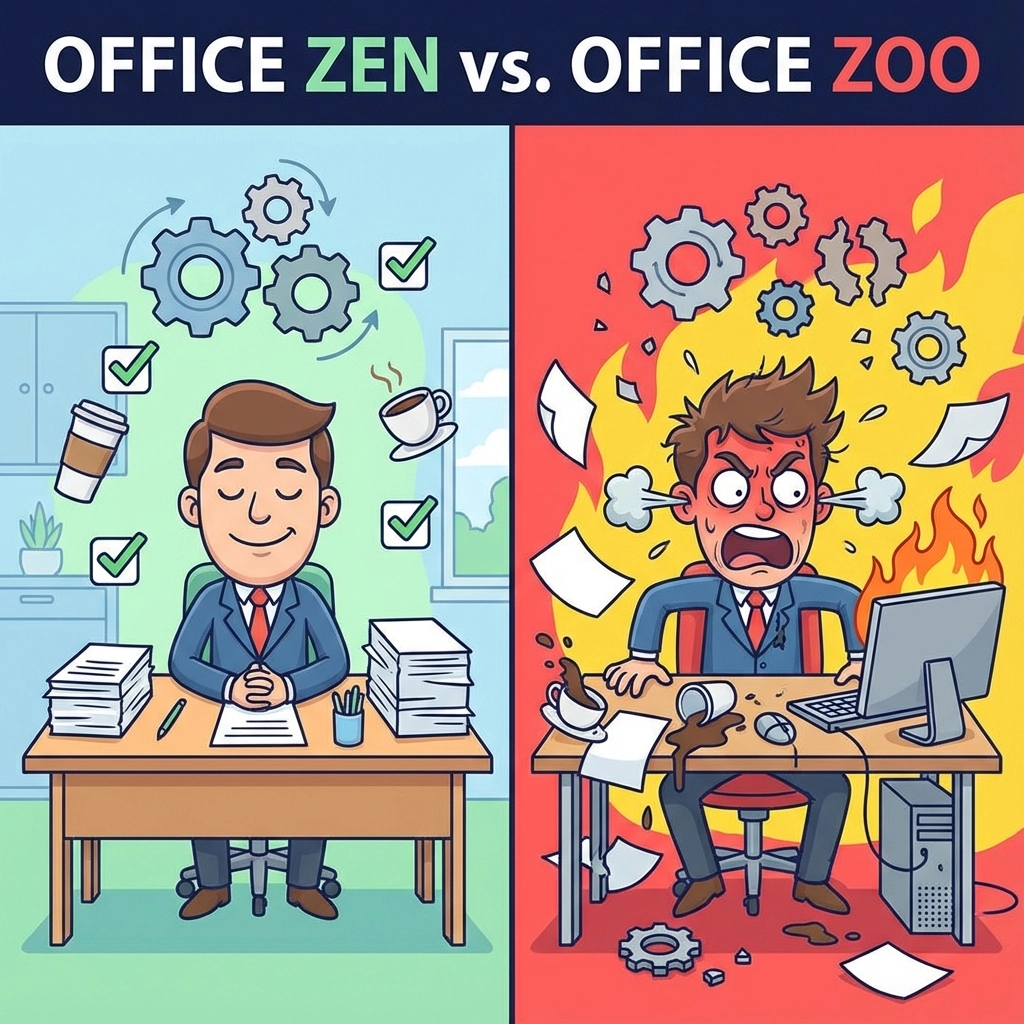
When you choose an MSP, you’re not just buying technical expertise. You’re buying into a communication culture. Do you want an environment where problems get solved through calm, methodical collaboration? Or do you prefer chaos, stress, and adversarial problem-solving?
The Long-Term Impact on Your Business
Companies that prioritize respectful, professional communication in their vendor relationships see measurable benefits:
- Faster problem resolution when issues arise
- Clearer project communication and fewer misunderstandings
- Better long-term planning based on collaborative relationship building
- Lower overall support costs through efficient resource utilization
- Higher team satisfaction on both sides of the partnership
Conversely, businesses that normalize hostile or chaotic communication patterns often find themselves paying premium rates for inferior service as quality vendors decline to work with them long-term.
Making the Right Choice for Your Business
If you’re evaluating MSP partners, consider not just their technical capabilities but their communication standards and emotional intelligence. The cheapest provider isn’t always the most cost-effective if they can’t handle complex situations professionally.
Ask potential MSPs about their communication policies, escalation procedures, and how they handle difficult situations. Do they have clear standards? Do they protect their team’s ability to serve all clients effectively? Do they measure and manage the true costs of service delivery?
Your business deserves an IT partner that brings both technical expertise and professional maturity to every interaction. Problems will arise: that’s inevitable in technology. But how those problems get solved determines whether you’re building a sustainable partnership or just buying temporary fixes.
Want an MSP built around calm, process-driven problem-solving rather than chaos and stress? Schedule a discovery call to see how we approach technical challenges with both expertise and emotional intelligence.
Because in the end, identical problems should have similar costs: and the only variable should be how professionally everyone chooses to solve them together.