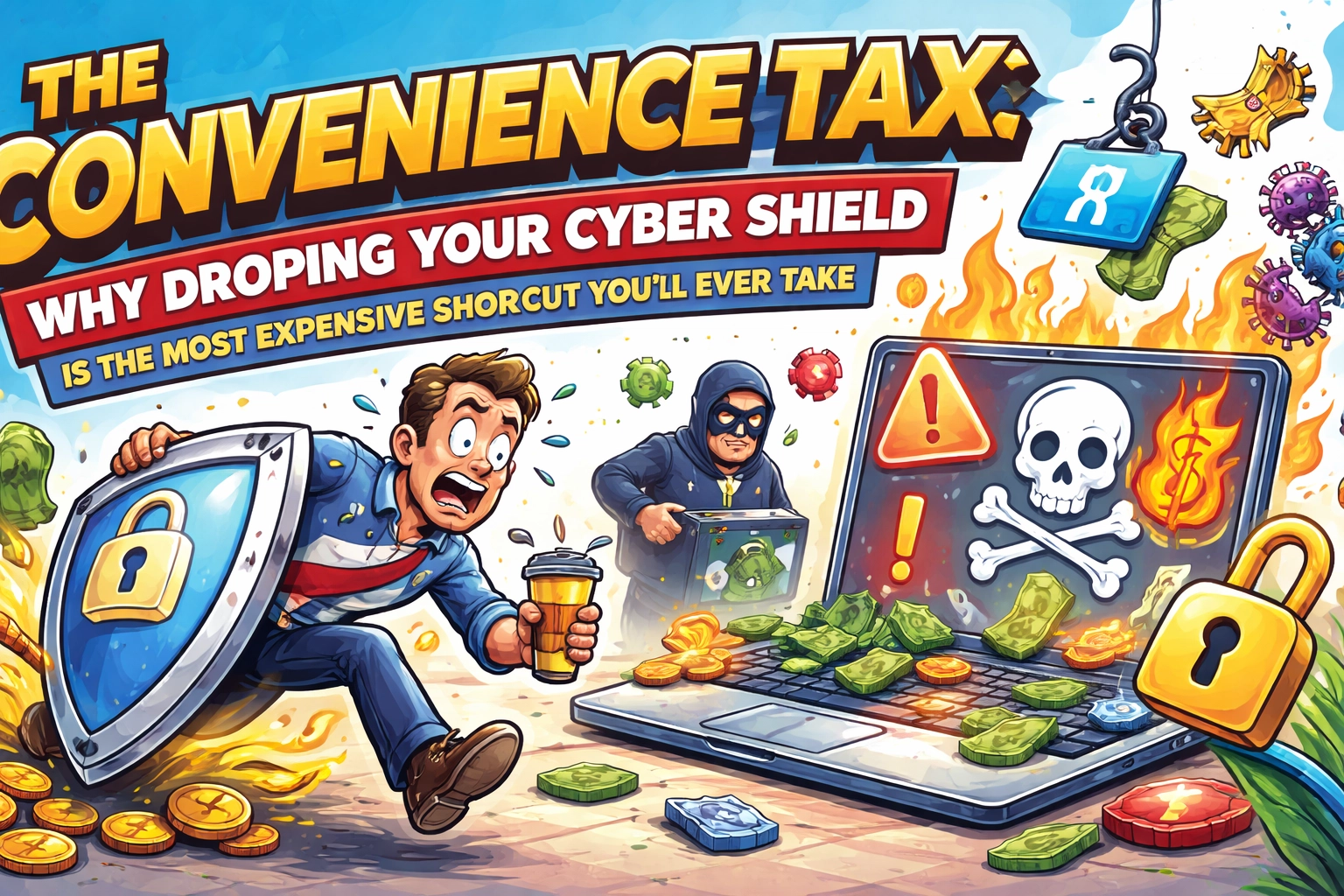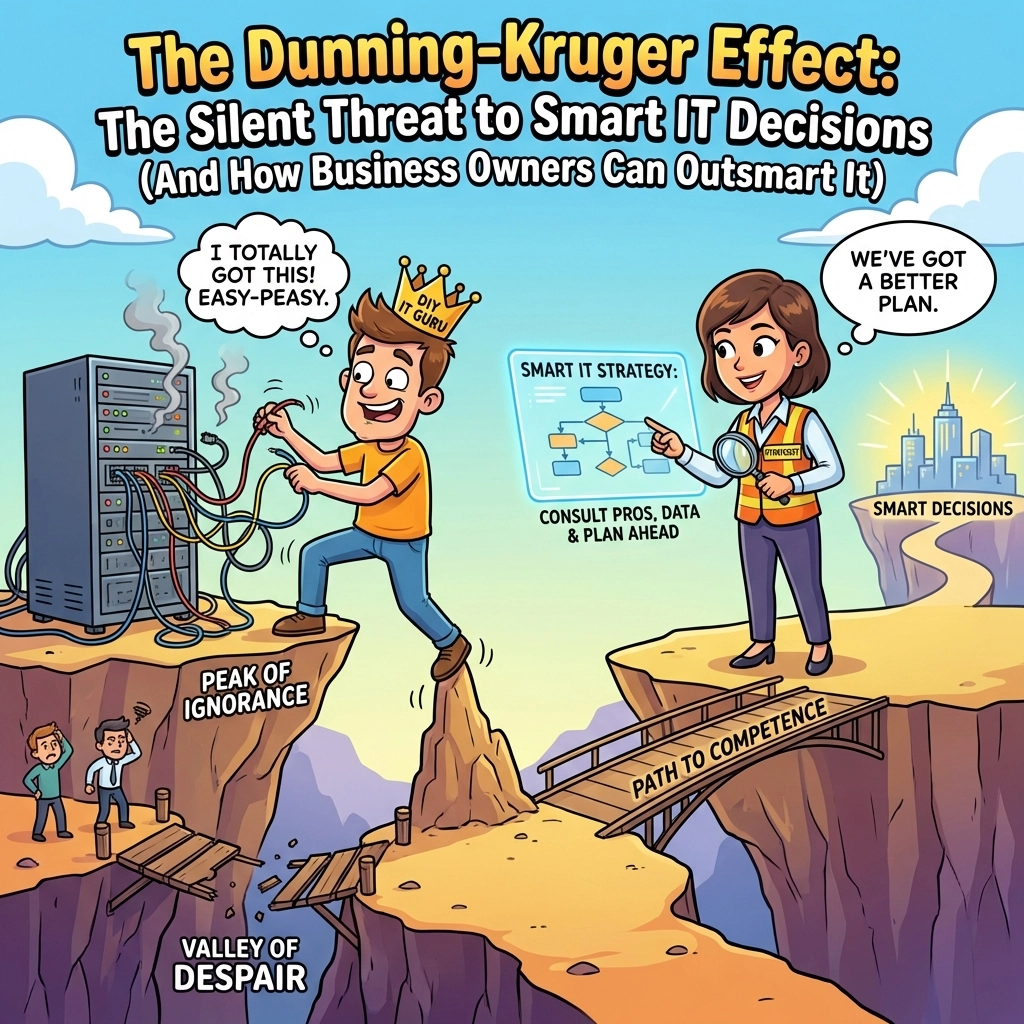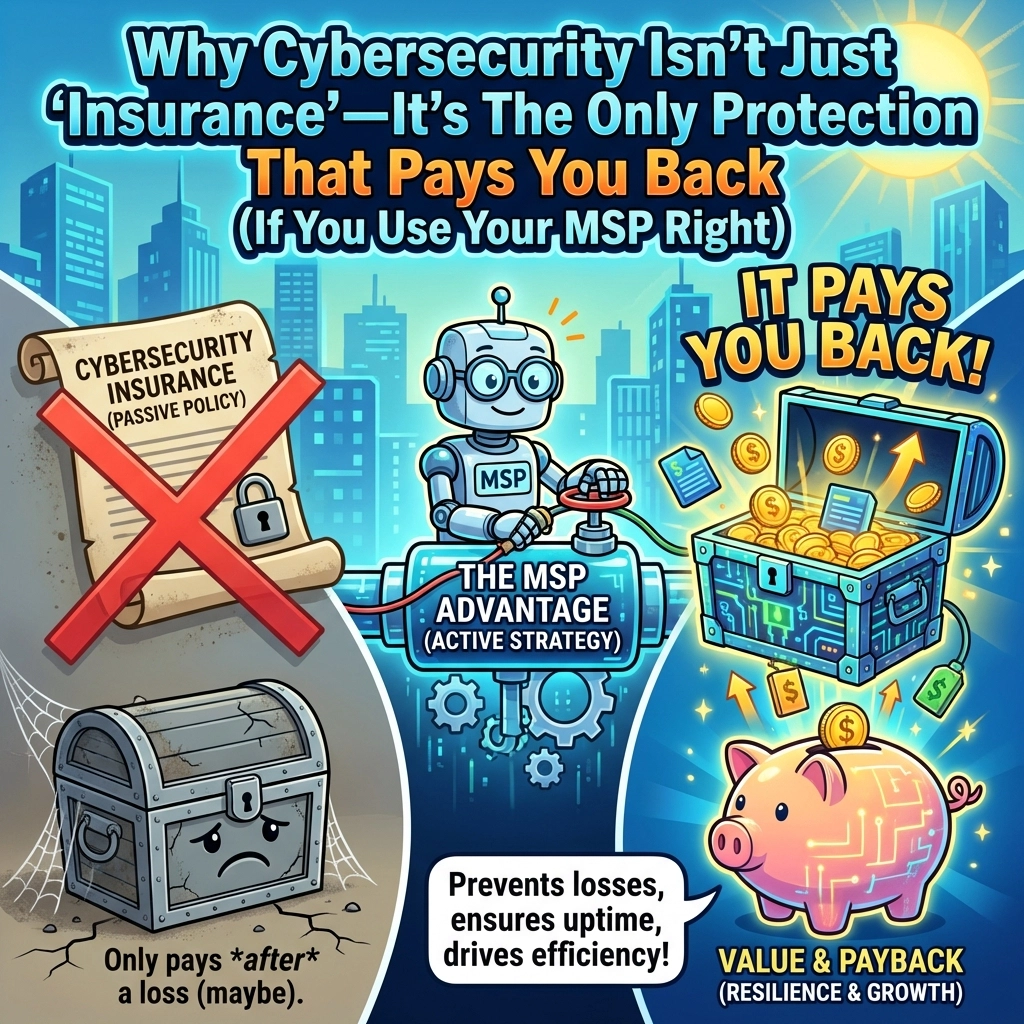
Three words. That’s all it takes to torpedo a professional relationship, compromise your security posture, and set your business up for a spectacular, and expensive, failure.
“I’m the client.”
The moment those words leave someone’s mouth, something shifts. It’s not a statement of fact. It’s a weapon. It’s the professional equivalent of “because I said so,” and it almost always precedes a terrible decision that the person saying it will later blame on everyone except themselves.
Let’s talk about why this phrase is poison, especially when you’re dealing with IT and cybersecurity professionals who are literally trying to keep you from becoming a cautionary tale.
The Entitlement Trap
Here’s the pattern: A client hires an expert. The expert gives advice based on years of experience, industry standards, and actual knowledge of how threats work. The client doesn’t like the advice because it’s inconvenient, requires learning something new, or costs money.
And then it happens.
“Well, I’m the client, so just do what I’m asking.”
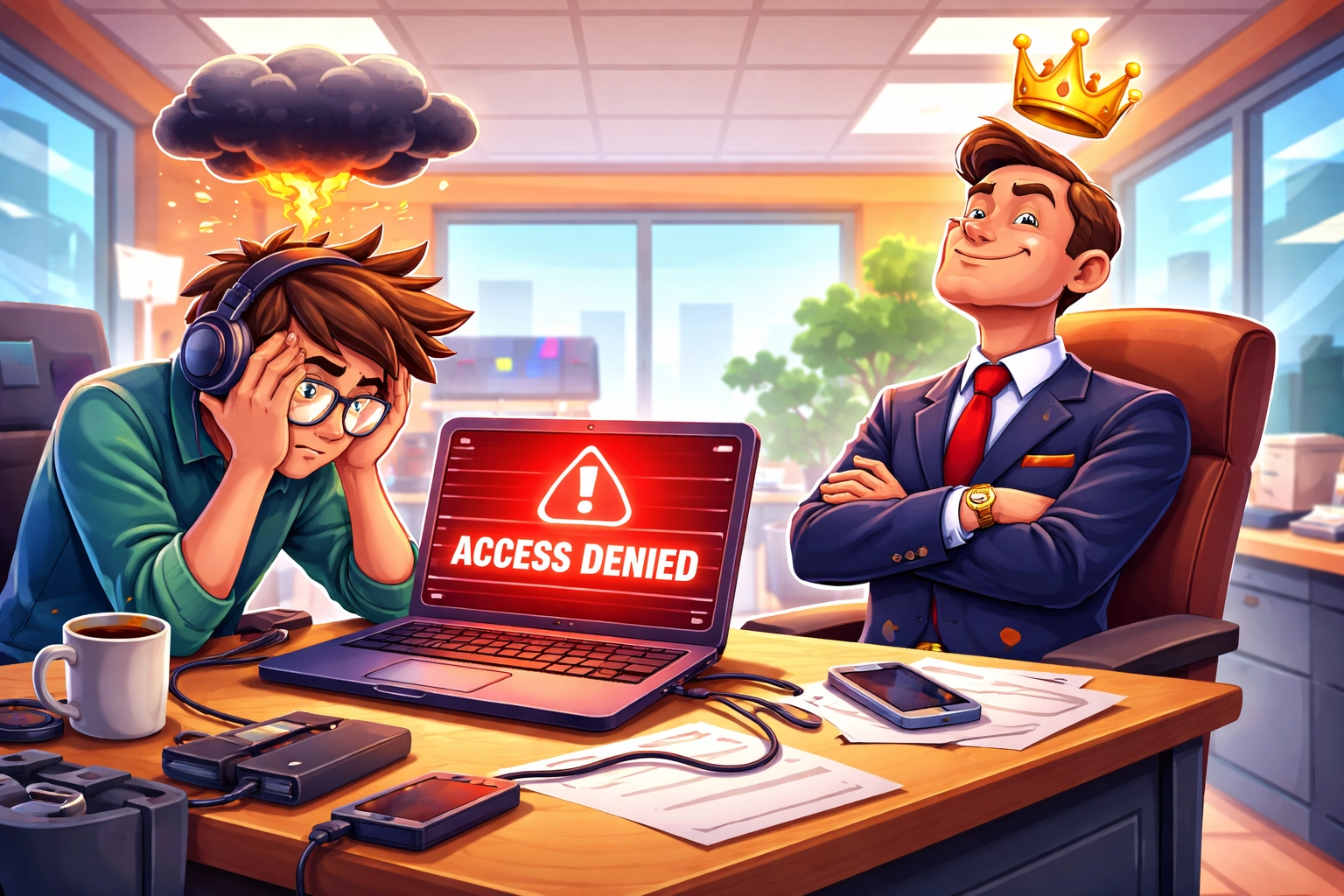
This phrase is almost never used to request something reasonable. Nobody says “I’m the client” when asking for a status update or requesting a meeting. It’s reserved for the moments when someone wants to:
- Disable multi-factor authentication because “it’s too many steps”
- Skip email security because “it slows things down”
- Use the same password everywhere because “I can remember it”
- Ignore a security recommendation because “we’ve never had a problem before”
The entitlement trap is real: the person paying for expertise decides they know better than the expert they’re paying. It’s like hiring a personal trainer and then demanding they let you eat pizza on the treadmill because you’re the one paying for the gym membership.
Partnership vs. Transaction: Know the Difference
There’s a fundamental difference between a vendor and a partner.
A vendor takes your order. You say “jump,” they say “how high?” You want to disable your firewall? Sure thing, boss. You want to use “password123” for your entire organization? Coming right up.
A vendor’s job is to make you happy in the moment, even if it means watching you walk into traffic.
A partner, on the other hand, tells you when you’re wrong. A partner pushes back. A partner says, “I understand that’s what you want, but here’s why that’s a terrible idea and here’s what we should do instead.”
When you hire a cybersecurity professional or an IT support team, you’re not hiring a yes-man. You’re hiring someone whose job is to protect you, sometimes from external threats, and sometimes from yourself.
The “I’m the client” card is an attempt to force a partnership into a transactional box. It says, “Stop being my partner and start being my order-taker.” And that’s exactly when things start to go wrong.
The “Customer is Always Right” Lie
Let’s kill this myth right now: The customer is not always right.
The customer is sometimes catastrophically, dangerously, expensively wrong.
The phrase “the customer is always right” was coined in the early 1900s as a customer service philosophy, it was about making people feel valued, not about literally deferring to their judgment on technical matters. Somewhere along the way, it got twisted into a justification for ignoring expert advice.
In cybersecurity, the customer is often wrong. That’s not an insult, it’s the reason they hired an expert in the first place. You don’t know what you don’t know, and that’s okay. What’s not okay is pretending you do know, and then pulling rank when someone tries to educate you.
Here’s a short list of things clients have been “right” about that ended badly:
- “We don’t need a password manager.” (Result: credential stuffing attack, multiple accounts compromised)
- “Email security is overkill for our small business.” (Result: Business Email Compromise, $47,000 wired to a scammer)
- “I’ll handle backups myself.” (Result: ransomware, no viable backups, business closed)
The customer hired an expert because they needed expertise. Pulling the “I’m the client” card to override that expertise defeats the entire purpose.
The Accountability Dodge
Here’s the dirty secret behind “I’m the client”: it’s often an accountability dodge.
When someone demands that security controls be disabled or ignored, they’re not just making a bad decision. They’re setting up a future blame game. When things go wrong, and in cybersecurity, “when” is more accurate than “if”, they want someone else to point at.

“Why didn’t you protect us?”
“You’re the IT people, you should have stopped this!”
“I’m not paying for the cleanup, this is your fault!”
But here’s the thing: when you override professional advice with “I’m the client,” you’re not just making a choice. You’re taking ownership of the consequences. You don’t get to demand a bad decision and then act surprised when it blows up in your face.
This is why good IT partners document everything. When a client insists on disabling protections against professional advice, that gets written down. Not because we want to say “I told you so” (okay, maybe a little), but because accountability matters. If you’re going to make a choice that increases risk, you need to own that choice.
The “I Know Better” Crowd and the Cash Bleed
There’s a certain type of client, let’s call them the “I Know Better” crowd, who treats every professional recommendation as a negotiation. They question everything, not out of genuine curiosity, but out of a need to assert dominance.
These are the clients who:
- Spend three hours arguing about a $50 security tool, then lose $5,000 to a preventable breach
- Demand custom solutions to problems that have industry-standard fixes
- Create massive scope creep by constantly changing requirements, then complain about costs
- Refuse to follow documented procedures, then blame the provider when things break
This attitude doesn’t just damage the client-provider relationship. It bleeds cash. Every hour spent arguing about whether basic security measures are “really necessary” is an hour not spent actually improving security. Every custom workaround for a client who refuses to use standard tools creates technical debt that someone has to pay for eventually.
The “I Know Better” crowd often ends up paying more, getting less, and experiencing more problems than clients who simply trust the process. The irony is painful.
How to Be a Great Partner (Hint: Trust the Expert You’re Paying)
If you’ve made it this far, you might be wondering: “Okay, so how do I NOT be that client?”
Good news, it’s not complicated:
1. Remember why you hired an expert. You hired them because they know things you don’t. Let them do their job.
2. Ask questions, but listen to answers. Curiosity is great. Asking “why do we need this?” is valid. But when the expert explains why, actually consider their answer instead of immediately looking for ways to argue.
3. Understand that inconvenience isn’t the enemy. Security measures exist because threats exist. A little friction in your login process is infinitely better than a ransomware attack.
4. Treat your IT provider as a partner, not a servant. The best client relationships are collaborative. You bring knowledge of your business; they bring knowledge of technology and security. Together, you make better decisions.
5. Own your choices. If you decide to override professional advice, own that decision. Don’t come back later pretending you didn’t know the risks.
The Bottom Line
“I’m the client” is a phrase that destroys partnerships, enables bad decisions, and sets the stage for expensive failures. It’s the battle cry of someone who wants control without accountability, authority without expertise.
The best clients we work with at Your Personal Ninja don’t pull rank. They ask questions, they trust the process, and they understand that we’re on the same team. When we push back on a request, it’s not because we enjoy being difficult, it’s because we’ve seen what happens when security takes a backseat to convenience.
If you’re looking for a vendor who will say yes to everything and let you walk into traffic, we’re not the right fit. But if you want a partner who will actually protect your business, tell you the truth, and help you make smart decisions, even when those decisions require a little extra effort, then let’s talk.
Ready for a Partnership Audit? Schedule a call and let’s see if we’re the right fit for each other. No “yes men” here: just honest, expert guidance from people who actually give a damn about your security.